Interested in battery storage for your home? Some things to consider.
By Don Tonic
These days, we’ve gotten lots of inquiries from our customers interested in battery backup systems. Since it’s still a relatively new technology for homeowners, I thought I’d take a second to explain some of the details involved.
First thing to clear up – You cannot run everything in your home via your battery bank; unless you either use very little energy or have a spare $50,000 on hand. The typical range of home storage is currently around 4 kWHs to 16 kWHs. To put this in perspective, the annual average daily home consumption ranges from 21 kWHs on the low end to as much as 65 kWHs on the high. HVAC being the #1 culprit along with electric heating, washer/dryers & dishwashers.
This being said, the best option that we recommend is sizing a battery backup to power items in your home that are vital during an outage and also to cover the average 20% of power used during evening hours.
Life cycle is another thing to consider. Some are warrantied for 2 years, 5 years or 10 max; along with x amount of cycles. Some can be discharged not more than 50%, some 75%, some all the way to zero % charged. Their price ranges reflect the differences. Regardless of the sticker shock though, the thing to most consider is exactly how many cycle/years you’re actually getting for your money & what would be your best long term option.
Safety is a HUGE factor that is often overlooked in the mad rush to buy Tesla Powerwalls. The current 3 batteries on the home market are made of lead acid, lithium ion & lithium phosphate:
Lead acid – contains a solution that requires ventilation, safety racking & large conductors. Highly volatile & flammable plus are not safe in high temperature environments.
Lithium Ion – made of a series of small cells. If for any reason one is punctured & exposed to air, it ignites a flame that could burn even fully submerged under water. The biggest problem with these is that they then chain react with the other cells & becomes a raging inferno in a flash. (Youtube a “puncture a lithium ion battery” video & you’ll have a new found respect for the little potential fireballs we carry on our person all day – known as cell phones.)
Lithium phosphate – made of a material that is non toxic & non flammable. They can function well in super cold to super hot no problem.
For these reasons, we strongly recommend buying only lithium phosphate batteries.
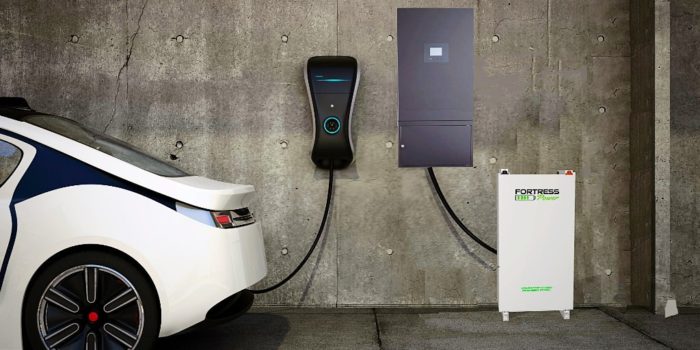
The final thing to consider is using it in tandem with your solar system & inverter. Due to safety for the utility linemen, most inverters/solar systems power off during a grid outage. So to utilize battery storage & the solar resource, what’s known as a hybrid inverter is required.
If an outage occurs, they’re equipped with an auto transfer switch that reroutes the power to strictly the panels, batteries & a back up service panel to power the home emergency loads; bypassing the grid connection entirely. There’s only a few inverter manufacturers that make these. Similar to the batteries, they come in a variety of different prices & warranty life spans.
So if you plan on having a reliable backup system for the 25 year lifetime of your solar system, you may want to consider the costs involved in the number of times you’ll need to replace inverters & batteries; the number of items you’d realistically need to have powered during outages; and whether or not safety matters to you. (We hope it does!!)